A poem is a city filled with streets and sewers
filled with saints, heroes, beggars, madmen,
filled with banality and booze,
filled with rain and thunder and periods of
drought, a poem is a city at war,
a poem is a clock asking why,
a poem is a city burning,
a poem is a city under guns
its barbershops filled with cynical drunks,
a poem is a city where God rides nakes
through the streets like Lady Godiva,
where dogs bark at night, and chase away
the flag; a poem is a city of poets,
most of them quite similar
and envious and bitter . . .
a poem is this city now,
50 miles from nowhere,
9.09 in the morning,
the taste of liquor and cigarettes,
no police, no lovers, walking the streets
this poem, this city, closing its doors,
barricaded, almost empty,
mournful without tears, aging without pity,
the hardrock mountains,
the ocean like a lavender flame,
a moon destitute of greatness,
a small music from broken windows . . .
a poem is a city, a poem is a nation,
a poem is the world . . .
and now I stick this under glass
for the mad editor's scrutiny,
and night is elsewhere
and faint gray ladies stand in line,
dog follows dog to estuary,
the trumpets bring on gallows
as small men rant at things
they cannot do.
Showing posts with label bukowski. Show all posts
Showing posts with label bukowski. Show all posts
Wednesday, 15 July 2009


Thursday, 12 February 2009
John Fante - 'Wait Until Spring, Bandini'
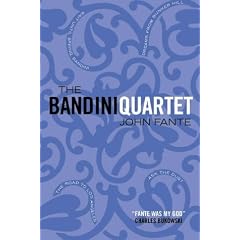
I began reading this novel last night and finished it during the early hours of this morning, as I'm wont to do occasionally. It was the same with the last one by John Fante that I read, 'Ask The Dust' - as with the likes of Charles Bukowski, Richard Brautigan, and sometimes Adolfo Bioy Casares, I seem to be able to rampage through Fante's prose like a monster truck with its breaks cut. I meet no resistance at any point - it's a pleasurable and easy venture - and this is not to be confused with simplicity.
Devotees of Bukowski will probably find much to like in Fante's work. The former freely acknowledged him as a huge influence, and when reading the likes of 'Wait Until Spring, Bandini' you find echoes of Henry Chinaski when in fact you have to remind yourself that it's the other way round. Both are concerned with the workings and foundation of the male psyche in bygone days of blue collar America. Bandini's America and in particular Bandini's Los Angeles feels very much the same as Chinaski's.
Knowing the cliche yet throwing myself entirely upon the reader's mercy in the hope that you won't adopt too much of a scornful expression, I think part of the reason that I enjoy and relate to the works of Bukowski and Fante so much is that I was once a young man not even out of his teens who, mostly in the name of beer money, did a variety of jobs he hated and was attuned to the sense of unfairness, humilation, cynicism, and above all boredom that such a situation inspires. Bukowski writes in his introduction to 'The Bandini Quartet' that at one point in his life he was prone to exclaiming "I am Bandini, Arturo Bandini!" and this in turn mirrors the spirit in which many read his own tales of Chinaski - there is much to be found that is real and true if you've led and found yourself stuck in a certain way of life. I am not Arturo Bandini any more than I am Henry Chinaski, but enough of their thoughts and lives coincide with mine that I find it hard not to identify strongly with them at times. This is a testament to the power of both authors I think, although probably also to my own inclination to insert myself in some way into narratives that truly grip me. We all do it though, right?
Subscribe to:
Posts (Atom)