Showing posts with label reading. Show all posts

Saturday, 8 August 2009

'The Anubis Gates' by Tim Powers

'. . . They move in dark, old places of the world:
Like mariners, once healthy and clear-eyed,
Who, when their ship was holed, could not admit

Ruin and the necessity of flight,

But chose instead to ride their cherished wreck

Down into darkness; there not quite to drown,

But ever to continue plying sails

Against the midnight currents of the depths,

Moving from pit to pit to lightless crag

In hopeless search for some ascent to shore;
And who, in their decayed, slow voyaging
Do presently lose all desire for light

And air and living company - from here

Their search is only for the deepest groves,

Those farthest from the nigh-forgotten sun . . . '


- From 'The Twelve Hours of the Night' by William Ashbless. Extracted from...


I love this book. I bought it some time ago but have only just gotten around to reading it fairly recently. I should have read it right away, as I'll now urge you to: as soon as I got stuck in and realised how ludicrously enjoyable The Anubis Gates is, the thought that kept returning to me was 'Where the hell have you been all my life?!' That pretty much summarises the simple and heartfelt recommendation I'd like to make on the novel's behalf - books I've had this much fun reading have been few and far between.

Friday, 26 June 2009

Gustav Meryink - 'The Golem'

This was a bit of an impulse purchase but a good one. The novel focuses upon the inhabitants of the Jewish ghetto in Prague during the late nineteenth century. As Borges put it, it's a story set in an Eastern Europe on "the other side of the mirror" where the central framing narrative - that of the unnamed narrator's dream in which he becomes another man some thirty years previous - is stacked with further dreams and dislocations relating to the eponymous Golem, a monster of Kabbalistic legend that appears every thirty-three years in a room with no door. The doppleganger theme and a general mirroring of characters and events are deeply woven into the text: the narrator inhabits the body of Pernath and at times also becomes the Golem (who at times takes on a resemblance to those it encounters) and this sense of labyrinthine interconnection lends the novel the surreal, hallucinatory air that something's not quite right even during the most lucid moments. The Golem is a strange dream.

Although at times the novel seems mired or perhaps slightly befogged in an odd mix of mysticism (according to the potted timeline of Meyrink's life included in the introduction, from 1893 to 1896 he investigated "Cabalism, freemasonry, yoga, alchemy and hashish") it is the meat of the story - the plots and counterplots hatched between the ghetto's inhabitants, Pernath's increasing delirium, and the way in which the cramped little enclave itself and the people within it are so vividly characterised - that maintains interest after the decidedly odd atmosphere has hooked it. Further to this, although I did at times find the alchemical content a little tiring (e.g. long sections on the concept of the fusion of male and female to create a perfect being) it reminded me slightly of similar content in Moorcock's The City of the Autumn Stars, another text that visits a Prague similar but quite different to the one of material reality. I also thought that I detected some reverse-echoes of Michael Cisco's The Divinity Student and, appropriately enough, The Golem in Meyrink's novel although at this point it's difficult to place exactly where. It's undoubtebly an influential text, if a relatively and undeservedly obscure one and I'm glad to have read it.

Tuesday, 16 June 2009

Review: 'Nights of Villjamur' by Mark Charan Newton


If you've been reading this blog for any length of time you'll probably know that my tastes can be quite specific. My relationship with Fantasy & Science Fiction has been a turbulent one: large scale booms and slumps in interest triggered by particular authors or movements lead me on to investigate contemporaries writing comparable material, earlier writers that influenced them, and so on. This is how I read: I rarely go for new works by new authors because I'm mostly too busy with books written twenty or thirty years ago whose echoes, I have been told, can be found in the works of authors I'm already a fan of. Miéville sent me in the direction of Moorcock and M. John Harrison (to name but two) who in turn brought me to Clark Ashton Smith. Vandermeer brought me to Borges and Italo Calvino, who then sent me off after the Thousand and One Arabian Nights. I tend to go backward in time more than forward. I don't often go out on a limb. I couldn't tell you who the top five best-selling Fantasy writers of the moment are - I don't have a clue.

We have a pact, new Fantasy fiction and I: I'll read you if you'll show me Something A Bit Different. To explain what I mean by "different" (although at times I'm not sure myself) I'll put it in context: the advent of the New Weird early this decade changed everything for me. I can't really read the George R.R. Martins of this world anymore, the Joe Abercrombies (even though I'm told he's quite good) and so on - my bearings and landmarks have now been irretrievably altered, and the appearance of words like Epic, High or Heroic beside Fantasy is more likely to make me put down a book than pick it up. After the New Weird, traditional Fantasy just doesn't really do it for me anymore - or rather I don't see it as a continuing, living genre in which I should invest my attention. "Show me something a bit different!" I cry. "Well, you know what I mean..." They shrug, as if to say "feudal intrigue and swordfights: what more could you want?" I reread 'Perdido Street Station' for the trillionth time instead.

This brings me to 'Nights of Villjamur'. I heard about Mark Charan Newton early this year and the Internet hype for his second novel (although the first from a major publisher) has been absolutely deafening. As I said, I tend to do a lot of my book buying via references and influences, and as such I read a few interviews, took a look at his blog and all seemed mighty promising. So, aside from slight misgivings about appearances of the word Epic in relation to the book, I went ahead and preordered with appetite whetted and expectations set.

When I finally read the novel I wasn't disappointed. One major factor in my enjoyment was the subgenre/tradition in which it is placed: the Dying Earth. There's something very cool about Newton's resurrection of this form of fiction, one that originates from the pulp Weird days where Fantasy, Sci-Fi and Horror were still all the contents of a great glorious melting pot rather than being neatly divided and subdivided into marketing categories. Mark has stated in interviews that he previously attempted to write New Weird but turned away from it because editors nowadays won't touch it with a barge pole. I have a suspicion, the same one that arose when reading 'Thunderer' and 'Gears of the City' by Felix Gilman, that the author's trying to smuggle in some of that inter-genre, New Weird, a bit different goodness on the sly. There's enough swashbuckling swords and sorcery, machiavellian machinations of powers and dominions, and so on here to keep the readers of the Fantasy mainstream on board, yet when you take a closer look you realise that the "magic" might well actually be salvaged high-tech of a ravaged future long past and that the characters and society of the novel are, below the surface, more akin in many ways to the inhabitants of a real-world modern city than those of days of yore. Indeed, this is no mere stale tale of the grand destinies of the great and the good, rather at times we see relatively ordinary people with their relatable worries about careers and relationships, working and living in what comes across as a real city rather than a hackneyed Fantasy backdrop. This is one of the things that I liked in Miéville's Bas Lag novels. It's one of the things that keep me reading in the genre at all.

This sense of Villjamur as a working city full of individuals and their lives as opposed to a broadly sketched stage for big events comes across in Newton's handling of its numerous non-human inhabitants. He takes their unique characteristics, with their advantages and drawbacks, and shows (with evident thought) exactly how they fit into society, for instance showing us why the rumel might be particularly suited to police work, why garuda are found in particular sections of the armed forces, or how a banshee might assist in a murder enquiry. They aren't just quasi-human monster-folk there for the sake of it. It is a coherent and expansively imagined world.

I'm quite glad I read 'Nights of Villjamur' shortly after finishing Gene Wolfe's 'Book of the New Sun'. I picked up a few things in the former that I'm pretty sure are references to the latter, for instance a certain token given by one character to another in exchange for a helping hand by chance (no spoilers here!) or the colour of a garment. It's nice to recognize these things, reinforcing as it does the sense that the author is drawing from such an excellent tradition and showing an endearing and infectious fondness for it. I would even venture to describe this as an updated Dying Earth, one for a new century in the wake of the New Weird event. Rather than greeting the sun's waning with fatalism or mysticism as in other works, the world of Newton's creation is characterised by a grounded pragmatism - the powers of Villjamur take calculated steps to prepare for the coming ice-age as opposed to treating it as an abstract doomsday that they are resigned to or hope to be saved from by higher powers. It is hard to imagine the inhabitants of Zothique stockpiling firewood.

The novel kicks along at a fair pace, never dawdling unnecessarily, with no temptation on my part to skip ahead at any point - a page turner certainly. Newton's is an assured tone, with solid and polished prose, but at times I felt as if it was perhaps a little too clipped and focused upon driving the plot forward, sometimes relishing more the quieter, thoughtful moments of introspection or description. There's a vein of good humour running throughout - the characters are forever exchanging snappy quips, making wry observations, and there are moments of touching humanity that brought smiles to my face or tugged at heart strings. An interesting thing to note is that I actually related the most, and felt the most attached to, one of the novel's non-human characters - although I never lost sight of the fact that the character wasn't human. In a way that's quite an achievement really.

In conclusion, I'd recommend 'Nights of Villjamur'. Mark Charan Newton's definitely doing Something A Bit Different. From whatever perspective you're approaching it and whatever your requirements from a Fantasy novel I think it'll tick a lot of boxes. It did for me.

Wednesday, 29 April 2009

Miéville signing tomorrow in London


See here (cheers to Mark Newton for the tipoff: there'll also be a similar event for his own novel at the same place in June).

Here's the info cut&pasted:

"China Mieville - The City & The City: EXCLUSIVE pre-release event!
Thursday 30, April, 6:00PM - 7:00PM
Forbidden Planet London Megastore,
179 Shaftesbury Avenue, London, WC2H 8JR

RRP: £17.99

Our Price: £15.99

Forbidden Planet is pleased to announce an exclusive pre-release event for China Miéville’s The City & The City. Join China for a signing and reading at the Forbidden Planet Megastore, 179 Shaftesbury Avenue, London, WC2H 8JR, on Thursday 30th April 6 – 7pm. "


Will I be there? YEP! Amongst other things I thought I'd have to wait until the middle of next month to read this one, so it's a pleasant surprise that I'll hopefully be able to bag a copy in time to read on the plane and on the beach.

My experiences of these events are fairly limited: I haven't been to one in years although I vaguely remember being taken to a Dr Who related book signing by a friend in my early teen years and so I'm not sure about the etiquette: is it OK or severely cheeky if I bring along all my other hardbacks to be signed? It's not as if I'm intending to flog them on Ebay to the highest bidder - perish the thought! Not sure what's worse: being a nuisance or coming across as a total geek/fanboy. Wondering if I've got space in my bag for 'Perdido Street Station', 'The Scar', 'Iron Council', 'Looking for Jake' and 'Un Lun Dun' anyway to be honest.

Thursday, 16 April 2009

Plots summarised a little differently...

I've been lolling at this on and off all day. Here's one in particular that grabbed me:

"NINETEEN EIGHTY-FOUR: Authorities contain terrorist threat."

Pitch black, utterly fitting, and very funny.

I've been thinking of some ones related to Sci-Fi & Fantasy literature, for example:

CHINA MIEVILLE - 'PERDIDO STREET STATION': A purportedly Liberal academic wreaks havoc through irresponsible animal testing, resulting in many deaths and much work for beleaguered authorities.

BORGES - 'THE SOUTH': Medical and social services fail a mentally ill old man who is a danger to himself and those around him.

JEFF VANDERMEER - 'VENISS UNDERGROUND': A man who can't get over his ex girlfriend does her douchebag brother a favour and loses his job because of it.

MARK Z. DANIELEWSKI - 'HOUSE OF LEAVES': A couple buy a home but neglect to hire a surveyor first. They realise their new property is structurally unsound and the resultant strain is too much for their marriage to bear.

ITALO CALVINO: 'IF ON A WINTER'S NIGHT A TRAVELLER': "You" eventually come to realise that quality control in Italian publishing/printing during the 1970s must have been shockingly bad.

H.P. LOVECRAFT: 'THE THING ON THE DOORSTEP': The protagonist and a friend drift apart after the latter marries ("bros before hoes, dude!") and finds that his father in law becomes increasingly controlling.

CLARK ASHTON SMITH: 'THE DARK EIDOLON': Animosity flares up between new neighbours. Property values plummet.

PHILIP K. DICK: 'THE THREE STIGMATA OF PALMER ELDRITCH': A philanthropic entrepreneur returns from a lengthy sabbatical with fresh thinking that could really make a difference. His contemporaries are ungrateful and unenthusiastic.

WILLIAM GIBSON: 'COUNT ZERO': A wayward lad spends too much time on the Internet, resulting in his mother's house burning down and a lot of problems for everyone.

NEIL GAIMAN: 'NEVERWHERE': London's street people take time out from their busy schedule of Special Brew drinking to take a man on a sightseeing tour.

MICHAEL MOORCOCK: 'DANCERS AT THE END OF TIME': A woman plays hard to get and spends all her time worrying about 'what her friends would say'.

Monday, 30 March 2009

Felix Gilman - 'Thunderer' & 'Gears of the City'


Just finished the latter. Good stuff.

The former has been pegged as 'High Fantasy' - more a marketing manoeuvre than anything else I suspect. I didn't read it as anything so simply defined - there are elements here comparable to Borges and also That Genre/Movement That Everyone Keeps Saying Is 'Dead'. In other words, there are many things about these books that mark them out as something a lot more interesting than straight Fantasy.

'Gears of the City' is also refereshingly different from most of the fare you might find on the Fantasy shelves in Waterstones - gritty, gloomy secondary-world Steampunk with, it seemed to me, also a nod to WWII Britain and The Blitz. At times the pace flags a little, at least in comparison with the first book, but that's really quite a minor quibble - the level of imagination and quality of storytelling here is at times astonishing.

Felix Gilman is definately a writer I'll be following with interest in future.

'The Dark Eidolon' by Clark Ashton Smith

Clark Ashton Smith
Full text here.

Reading 'The Dark Eidolon' again recently reminded me why it's one of my favourite Ashton Smith stories ('The Last Incantation' being another). There are no heroes, no happy ending, no redemption, no hope. The characters are inexorably dragged onward and downward by their own obsessions, weaknesses and mistakes, culminating in a great big fucked up mess. Nobody wins. It is a relentlessly bleak tale of stupid, petty, and very human vengeance.

There are some wonderful images, ideas, and phrases here: "a dark liquid full of star-cold lights" and the sudden appearance of Namirrha's "house" (not a palace, a sinister citadel, or anything so clichéd) to name but two examples. There's a fundamental dreamlike weirdness at work here that I can't quite place but find utterly compelling.

M. John Harrison is quoted (in my edition of 'The Emperor of Dreams') as saying that C.A.S. "helped point the way to the hard-edged British fantasy of the 1960s and '70s". Having read the likes of Harrison's 'Viriconium' stories and also the works of Michael Moorcock (who I would also count as a huge influence) I can definately see the truth in this statement, but I think Ashton Smith's stories are also very worthy of the attentions of current day readers and writers. He deserves to be read and rated a lot more highly than he is.

People keep telling me that the New Weird is "dead", whatever the hell that means - well, I think that if that's the case then now is a more appropriate time than ever to embrace all that the "old" Weird has to offer.

Thursday, 26 March 2009

Fantasy Centre, Holloway Rd


I was introduced to this remarkable place today by a friend. I don't know how I missed it.

According to the website it's "the only shop in Europe specialising in science fiction publications of all eras" and, established in 1971, it may even be "the oldest surviving specialist SF bookshop in the world".

I never really considered that anything like this existed, certainly not in this day and age. Rows upon rows of old pulpy paperbacks with garish covers, signed first editions, Sci-Fi & Fantasy as far as the eye can see. I walked around with a big gleeful childlike grin all over my face. If I had the money I'd have bought the entire place.

For the last few years I've done all my book buying online, simply because it's a hell of a lot cheaper and easier. I'm rethinking that now, feeling slightly bad that perhaps it's that kind of thing that contributes toward the hard times currently facing many an independant bookshop. I doubt I'll change my habits entirely overnight but it's made me think.

I doubt this typo would have pleased the author...


A couple of quotes showing that Hodgson's attitude toward the porcine might not have been particularly favourable:

"As the sounds ceased I saw something was rising up through the middle of the "defense". It rose with a slow steady movement. I saw it pale and huge through the swaying, whirling funnel of cloud - a monstrous pallid snout rising out of that unknowable abyss.... It rose higher like a huge pale mound. Through a thinning of the cloud curtain I saw one small eye.... I shall never see a pig's eye again without feeling something of what I felt then. A pig's eye with a sort of hell-light of vile understanding shining at the back of it." - The Hog

"It was a gigantic thing, and moved with a curious lope, going almost upright, after the manner of a man. It was quite unclothed, and had a remarkable luminous appearance. Yet it was the face that attracted and frightened me the most. It was the face of a swine." -
The House on the Borderland

Full texts of 'The House on the Borderland', 'The Night Land', the Carnacki stories, and more of Hodgson's fiction is available to read online via places such as Project Gutenberg.

Hodgson was a writer ahead of his time in many ways and although reading him is sometimes pretty tough going (the cod-archaic style of 'The Night Land' a case in point) I believe he made a lasting contribution to Weird fiction.
China Miéville's excellent introduction to this collection, now unfortunately out of print (I bagged a copy before the prices shot up) is well worth reading for anyone interested in the author and his works.


Monday, 16 March 2009

Charlie Brooker on Literature: "Apparently 65% of us have lied about reading the great works of literature. We needn't have bothered"


"The other irony is that while people lie about having read highbrow novels in order to impress each other, a massive percentage of highbrow novels aren't worth reading anyway because the authors are too busy trying to impress the reader (who, we now know, probably hasn't bothered turning up). That's why so many contemporary novels seem to largely consist of a thinly veiled version of the author discussing politics and art and quantum theory over a carefully selected bottle of wine with the devastatingly beautiful mixed-race wife of an impotent international statesman and/or gangster (delete where applicable) before whisking her off to a swish hotel room to have expert animal sex with her all weekend until a pigeon symbolising the unions or something crashes into the window and blah blah blah blah BLAH. I mean, really, who cares? Mr Tickle had 20 times the raw entertainment value - and it came with pictures - so if you can't beat that, don't bother."

Full article here.

LOL.

Cue dullards calling him 'anti-intellectual'. There's nothing particularly 'intellectual' or worthy about stuck-up, elitist bullshit. I think Brooker's seen through the Emperor's New Clothes..

Monday, 9 March 2009

Canon? Balls.

I've an abiding hatred of being told what to like, what is supposed to have worth and what is not. The prescription of canon, of taste, of such a nebulous thing as quality - it has always struck me as parochial at best and elitist and fascistic at worst. We're all guilty of making value judgments, but those that have the weight of an establishment behind them seem to me the worst by far - they have the most influence and can do the most damage.

As a student of English Literature I've had to keep my natural instict to rail against the supposedly high-minded and gentil tyranny of the literary establishment at bay. It's meant that I've broadened my horizons somewhat: instead of remaining predisposed against certain writers and movements (e.g. the Modernists) simply because they are so critically acclaimed amongst the makers of canons, these sneering self-styled arbiters of worth and genre (or "chutney and jam" as Graham Joyce so aptly puts it in his editorial piece in 'Postscripts 13') I've decided to dismiss both this reaction against and also any pushes in their favour and merely judge them on their merits according to my own reading. I enjoyed and learned from these works not because they belonged to some bullshit 'official reading list' of high literature but according to my own judgment. I really do find the glorified herd mentality quite sickening: I thought that was something you only got in low culture, eh chaps?

I suppose in this post I'm announcing my own hostile intent toward canons. Add another 'n' and you get what I realise is a truly bad pun, but hear me out: canons are created to defend/maintain the status quo. Canons are destructive - but they create walls and barriers rather than breaking them. Canons are used by those within against those outside.

The only canons I believe in are the ones we create for ourselves and are only relevant to ourselves. Don't tell me what's "of high value" or "important": tell me what you like. Don't preach, recommend. I'll make up my own mind.

Tuesday, 3 March 2009

Aldous Huxley - 'Brave New World'


I'm midway through reading this for, I am thoroughly ashamed to say, the first time (full text here) and had to stop and blog. It's marvellous stuff.

The most striking and chilling of Dystopias, I think, are the ones that go under the guise of Utopias. Huxley, like Orwell, understood this all too well. There's something missing in today's Sci-Fi that can be found in works such as these. We, who in the Postmodern era have become so blasé in our discrediting and dismissal of all and sundry, our aloof alignment to non-alignment, do not and cannot really appreciate the terrible power of all-consuming, unbending ideology.

Monday, 2 March 2009

Love & War

Last weekend I was very kindly invited to an event at the Institute Of Education that took place as part of Jewish Book Week - a talk/Q&A session with "emotional/moral philosopher" Professor Aaron Ben-Ze'ev entitled 'In The Name Of Love'. It was in part a promotion for his book 'In The Name Of Love - Romantic Ideology & Its Victims' which I have since begun reading.

The book examines romantic love from a curious perspective: on one hand it examines its changing nature and impact upon our lives in the modern day, and on the other it examines statements made by a people who have committed murder "in the name of love" - more specifically the killing of a partner or former partner. Each chapter begins with quotes from songs, poems, and the like regarding love but also those taken from interviews with murderers - and of course the interesting part of this is how utterly alike the sentiments expressed are.

As I'm currently grappling with a fictional character who is impelled toward terrible acts by the loss of love, this is all very interesting and useful stuff - all food for thought and the creative process. The canapes and miniature duck wraps at the reception afterwards (courtesy of the British Friends Of The University Of Haifa) were very tasty as well.

Tonight I finally got around to watching 'Waltz With Bashir'.

It has that odd look of a lot of today's computer assisted animation where everything's perhaps a little too fluid. That's not really a criticism, just an observation really.

I'll say what you're probably expecting me to say, because it's true: in visual terms it's beautifully done. I did feel however that for a film so concerned with the trauma of war it didn't entirely go as deep as it could have done into that theme/issue but instead preferred to skirt it with images, little allusory remarks, and so on. I'd tentatively suggest that it may be a case of 'style over substance' to an extent. I think I also miss a lot of nuance and feeling through watching it in subtitled form - but then I don't speak Hebrew and my co-viewer wasn't fluent either. All this aside, as a series of vivid snapshots of war though it definately succeeds.

The film's climax is shocking and extremely sobering, one of those times when everything goes a bit quiet in the room for a while afterwards. The abrupt switch (I won't go into specifics, you'll know if/when you watch it) brought to mind Theodor Adorno's dictum that there can be "no poetry after Auschwitz" - in the face of such horror, artifice is meaningless.

Thursday, 12 February 2009

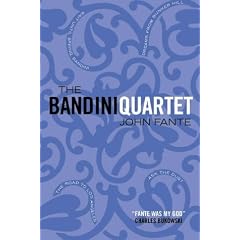
John Fante - 'Wait Until Spring, Bandini'


I began reading this novel last night and finished it during the early hours of this morning, as I'm wont to do occasionally. It was the same with the last one by John Fante that I read, 'Ask The Dust' - as with the likes of Charles Bukowski, Richard Brautigan, and sometimes Adolfo Bioy Casares, I seem to be able to rampage through Fante's prose like a monster truck with its breaks cut. I meet no resistance at any point - it's a pleasurable and easy venture - and this is not to be confused with simplicity.

Devotees of Bukowski will probably find much to like in Fante's work. The former freely acknowledged him as a huge influence, and when reading the likes of 'Wait Until Spring, Bandini' you find echoes of Henry Chinaski when in fact you have to remind yourself that it's the other way round. Both are concerned with the workings and foundation of the male psyche in bygone days of blue collar America. Bandini's America and in particular Bandini's Los Angeles feels very much the same as Chinaski's.

Knowing the cliche yet throwing myself entirely upon the reader's mercy in the hope that you won't adopt too much of a scornful expression, I think part of the reason that I enjoy and relate to the works of Bukowski and Fante so much is that I was once a young man not even out of his teens who, mostly in the name of beer money, did a variety of jobs he hated and was attuned to the sense of unfairness, humilation, cynicism, and above all boredom that such a situation inspires. Bukowski writes in his introduction to 'The Bandini Quartet' that at one point in his life he was prone to exclaiming "I am Bandini, Arturo Bandini!" and this in turn mirrors the spirit in which many read his own tales of Chinaski - there is much to be found that is real and true if you've led and found yourself stuck in a certain way of life. I am not Arturo Bandini any more than I am Henry Chinaski, but enough of their thoughts and lives coincide with mine that I find it hard not to identify strongly with them at times. This is a testament to the power of both authors I think, although probably also to my own inclination to insert myself in some way into narratives that truly grip me. We all do it though, right?

Saturday, 31 January 2009

Insight into the process

Recently author Jeff Vandermeer has been posting various notes and extracts from drafts on his blog, including ones that never made it into the 'final cut', on his blog. It's fascinating stuff.

In case you're reading this several months in advance of writing, in which case the posts I'm talking about won't be on the front-page anymore, I'll post some links up:

'Shriek: An Afterword - Genesis'

'Shriek: An Afterword - Alternate start to the war'

'Shriek: An Afterword - High level notes after completing first draft'


This selection is by no means definitive, and I'd heartily recommend a thorough exploration of the site, not just in terms of this material but because it's a damn good one.

In some cases it's like being provided with the literary equivalent of deleted scenes and director's commentary, and it definately allows new insight into the texts and the process that brought them to fruition. This sort of thing elevates Jeff's blog to a different level than that of many other authors, and is apart from anything else a very generous gesture to the readers, especially those who are writers themselves. You don't see this sort of thing very often, and it's a testament not just to the quality of Jeff's blog but also to blogs and their potential as a unique, invaluable format on the whole.

Tuesday, 27 January 2009

Most anticipated books of 2009

Since January's almost left us, and with it all pretence of maintaining the flimsy bundle of resolutions I professed, as ever, to carry into the new year, it's time to speculate upon the blank page ahead.

It looks like it'll be a good year for books. I say this because, amongst other reasons, there's a new novel from China Miéville on the horizon.

China Miéville - 'The City & The City'


Here's what Amazon.co.uk has to say:

When the body of a murdered woman is found in the extraordinary, decaying city of Bes el, somewhere at the edge of Europe, it looks like a routine case for Inspector Tyador Borlu of the Extreme Crime Squad. But as he probes, the evidence begins to point to conspiracies far stranger, and more deadly, than anything he could have imagined. Soon his work puts him and those he cares for in danger. Borlu must travel to the only metropolis on Earth as strange as his own, across a border like no other. With shades of Kafka and Philip K. Dick, Raymond Chandler and 1984 , "The City & The City" is a murder mystery taken to dazzling metaphysical and artistic heights.

Intriguing. Although I must confess my slight disappointment that the signs point to it not being another Bas Lag novel, it's been almost four years since 'Iron Council' and while 'Un Lun Dun' was fun, I've been positively champing at the bit for whatever comes next.

Miéville's stories are largely the reason I made the transition from reader to writer. I read 'Perdido Street Station' and 'The Scar' toward the end of my teens and they changed forever the way I looked at Fantasy fiction. In New Crobuzon I saw a city quite unlike those that I had become bored with in other works, one that resonated with my city, not merely one of some bygone year but the London that I grew up in and in which I still live. "Finally", I thought, "something relevant". On almost every rereading of the three Bas Lag novels I find new echoes of a world not a thousand years or miles away from that right outside my front door, for instance in 'Iron Council' with the "fast spat performative slang of the Dog Fenn Dozens" that seems a wonderfully sly reference to Drum&Bass/Hiphop/Grime MCing. New Crobuzon, of all the places that never were, feels the most like home.

China Miéville does cities like nobody else, combining the strange and alien with the familiar and somehow universal. His metropolises are all and none at the same time. Perhaps 'The City & The City' will epitomise this. Expectations are absolutely gargantuan.

Next up is 'Finch', the third book in Jeff Vandermeer's Ambergris cycle.

Jeff Vandermeer - 'Finch'


Vandermeer's another writer who had quite an effect on me. The sprawling "patchwork-novel" 'City of Saints and Madmen' (another of those books that I think only the hardcover editions truly do justice) and its successor 'Shriek: An Afterword' showed me that Fantasy could be inventive in terms of form, that that kind of literary sophistication need not merely be the preserve of the stuffy so called 'higher echelons'. Like Miéville, you can't really compare Vandermeer's works to anything else out there. I think he writes from quite a different perspective and intention than most other authors working in these genres. He's the best at what he does, and nobody else does it like Jeff. Here's the blurb, taken from his excellent blog 'Ecstatic Days':

A noir thriller/visionary fantasy set in the failed state of Ambergris, 100 years after Shriek: An Afterword. The gray caps, mysterious underground inhabitants, have re-conquered Ambergris and put the city under martial law, disbanding House Hoegbotton, and controlling the human inhabitants with strange addictive drugs, internment in camps, and random acts of terror. The rebel resistance is scattered, and the gray caps are using human labor to build two strange towers. Against this backdrop, John Finch, who lives alone with a cat and a lizard, must solve an impossible double murder for his gray cap masters while trying to make contact with the rebels.

Nothing is as it seems as Finch and his disintegrating partner Wyte negotiate their way through a landscape of spies, rebels, and deception. Trapped by his job and the city, Finch is about to come face to face with a series of mysteries that will change him and Ambergris forever.

The cat and the lizard watch intently. Something is about to happen. And they both want to know: who is Finch, really?

Who indeed? Although the previous two Ambergris books contained their fair share of darkness, this looks to be the grittiest, and Jeff has stated his pulp-noir intentions numerous times. It looks like 2008 may well be 'The Year of the Gumshoe'.

I applaud Vandermeer's decision to set this one far in advance of the previous. I don't think he's the sort of writer that would have a basic continuation from one novel to the next in any case, however there is a great sense of continuity in terms of the Big Picture. There has always seemed an air of latent prophecy, an expectation of terrible events to come hinted at and detailed subtly in other Ambergris fiction, and I feel as if we're about to see something come to fruition that we've known would happen since first opening 'City Of Saints'. We knew the greycaps would do it, and they did. Now what? I'm looking forward to finding out.

Finally we come to Ian McDonald's 'Cyberabad Days'.

Ian McDonald - 'Cyberabad Days'


The world: 'Cyberabad' is the India of 2047, a new, muscular superpower of one and a half billion people in an age of artificial intelligences, climate-change induced drought, water-wars, strange new genders, genetically improved children that age at half the rate of baseline humanity and a population where males out-number females four to one. India herself has fractured into a dozen states from Kerala to the headwaters of the Ganges in the Himalayas. Cyberabad is a collection of 7 stories: The Little Goddess. Hugo nominee Best Novella 2006. In near future Nepal, a child-goddess discovers what lies on the other side of godhood. The Djinn's Wife. Hugo nominee and BSFA short fiction winner 2007 A minor Delhi celebrity falls in love with an artificial intelligence but is it a marriage of heaven and hell? The Dust Assassin. Feuding Rajasthan water-rajas find that revenge is a slow, subtle process. Jasbir and Sujay go Shaadi. Love and marriage should be plain-sailing when your matchmaker is a soap-star artificial intelligence Sanjeev and Robotwallah. What happens to the boy-soldier roboteers when the war of Separation is over? Kyle meets the River. A young American in Varanas learns the true meaning of 'nation building' in the early days of a new country. Vishnu at the Cat Circus. A genetically improved 'Brahmin' child finds himself left behind as he grows through the final generation of humanity.


'Cyberabad Days' is the new short-story collection by the writer of 'River Of Gods' and would seem to be set in the same universe as the novel, which I would describe as a Post-Colonial, Post-Cyberpunk gem. In it we see a future a little different from those shown by the likes of William Gibson and Neal Stephenson, an India in the age of dirty neon lights and crafty, self-serving artificial intelligences. In moving the focus toward developing nations McDonald does something that I think is crucial to the Speculative fiction of the 21st century - he breaks down the barriers of Euro-American-centricism and allows a fuller picture to emerge, one that takes a wealth of influences from that which has been hitherto neglected. It's a process that I think began with the first wave of Cyberpunk and continues to this day.

The last collection of short fiction I read by McDonald was 'Speaking In Tongues', noteable for a great story called 'Floating Dogs' (think 'The Animals of Farthing Wood' meets 'Terminator'). 'Cyberabad Days' should tide me over nicely until Ian McDonald graces us with his next novel-length work.

Saturday, 24 January 2009

Adolfo Bioy Casares - 'The Dream Of Heroes'


It was a few years ago when I first read Jorge Luis Borges' 'Book of Imaginary Beings'. I came to it in a roundabout way as is so often the case, through China Miéville's novella 'The Tain' which, I learned, draws influence from the former. I followed 'the Fish of The Mirror' back along the labyrinthine spiderweb of ideas that connects every writer to every other and struck gold. Soon after that I became utterly enraptured by Borges' writings and still continue to be.

It was in a similar way that I came upon Adolfo Bioy Casares. It was only upon reading Richard Burgin's 'Conversations with Jorge Luis Borges' that I first heard of the relatively unknown Argentine writer. He was a contemporary and friend of Borges and I took there to be no greater recommendation than his association with the author.

'The Dream Of Heroes' is the second book I've read by Bioy Casares after the enjoyable 'Asleep In The Sun' and over a week after finishing it I find it still bubbles up in my mind during quiet moments.

The novel concerns Emilio Gauna, a young mechanic in Buenos Aires who runs with a gang of other wayward youths headed by the menacing Dr Valerga. The story follows his attempts to recover the events of three drunken days and nights during the 1927 carnival.

On the back cover of the book there is this quote from the text, something said by the sorceror Taboada:

"You went on a kind of journey and now you are full of a sense of loss like Ulysses back from Ithaca or Jason remembering the golden apples... That journey (since we have to call it something) was neither entirely good nor entirely evil. For your own sake and that of others, do not repeat the journey. It is a beautiful memory and memory is life. Do not destroy it."

This extract encapsulates the novel: a vivid exploration of the bittersweet adventures of youth, of how we come to venerate these memories in later years, the effect this veneration has upon our psyche and subsequently upon our lives, and ultimately what may happen if we allow our wistful reminiscence to gain too strong a grip. It is a story that will resonate with anyone who has ever been young and acted foolishly, anyone who has gone on 'an adventure', and anyone who has ever remembered and longed to repeat things now far gone and better left that way.

Adolfo Bioy Casares was a powerful writer, one who understood the capacity of the human animal, with its irrepressible, irrational wants and needs, to pursue unwittingly its own destruction. I was lucky to pick up a hard-back edition of this out-of-print novel in such good condition and will treasure it for years to come.